
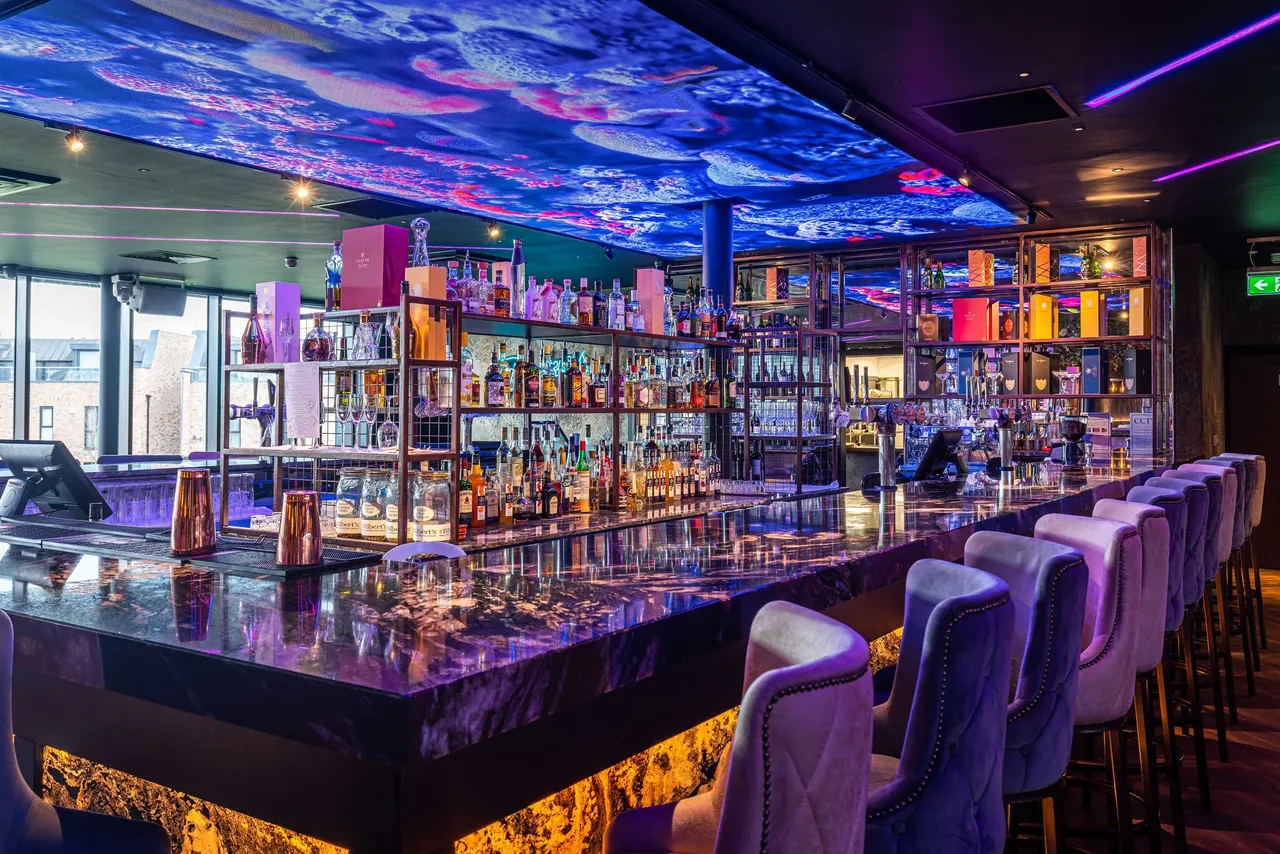
As digital technology becomes more seamlessly integrated into physical spaces, one feature is standing out in high-end commercial design: the LED screen ceiling.
Once reserved for flagship venues and major events, ceiling-mounted LED displays are now being adopted by retail brands, hotels, offices, entertainment venues and experiential spaces across the UK.
But what exactly is a ceiling LED display, and why are designers specifying them more frequently in 2026?
What is an LED screen ceiling?
An LED screen ceiling (also referred to as a ceiling LED display) is a high-resolution LED screen installation mounted overhead rather than on a wall or freestanding structure.
These displays can span small feature areas or cover entire ceilings, creating a fully immersive visual environment.
Unlike traditional lighting or decorative ceiling features, LED ceilings are dynamic. They can display moving visuals, branded content, ambient motion graphics, sky simulations, or even interactive experiences synced with sound, lighting or customer movement.
Modern LED technology allows these systems to remain slim, lightweight and bright enough for commercial use without overwhelming the space.
Why are designers using LED screen ceilings more often?
Designers and architects are under growing pressure to create spaces that are not just functional, but memorable. LED ceilings deliver impact without sacrificing floor space or cluttering walls.
Here’s why they are being specified more frequently:
1. They create immediate visual impact
A ceiling LED display draws the eye upward and changes how people experience a space. Whether it’s a luxury retail store, hotel lobby or showroom, overhead visuals instantly elevate perceived quality and innovation.
This makes LED screen ceilings especially popular in:
- Flagship retail environments
- Hospitality and leisure venues
- Exhibition stands and experience centres
- Corporate reception areas
2. They enable fully immersive environments
Unlike wall-mounted LED screens, ceiling installations wrap content around visitors in a more subtle and immersive way. Soft motion graphics, atmospheric visuals or slow-changing skies can influence mood without feeling like advertising.
This approach is increasingly used in:
- Wellness and spa environments
- Airports and transport hubs
- Museums and visitor attractions
3. They support flexible branding and content
One of the biggest advantages of LED screens is content flexibility. A ceiling LED display can:
- Change visuals throughout the day
- Reflect seasonal campaigns
- Adapt to events or promotions
- Display branded motion graphics or ambient scenes
For brands that refresh layouts or campaigns regularly, this removes the need for physical refits.
Are LED screen ceilings practical for commercial use?
In 2026, the technology has matured significantly. Modern LED screen ceilings are designed to be:
- Energy efficient, especially when compared to older lighting systems
- Lightweight and modular, making them easier to install
- Low maintenance, with front or rear service access
- Bright and colour-accurate, even in well-lit environments
When installed correctly by experienced LED screen specialists, they are safe, reliable and compliant with UK commercial building standards.
What types of content work best on ceiling LED displays?
Designers tend to favour content that enhances atmosphere rather than dominates attention. Popular choices include:
- Slow-moving abstract visuals
- Natural elements (sky, clouds, water, foliage)
- Subtle branded animations
- Architectural patterns and textures
For retail and experiential spaces, content can also be synchronised with wall-mounted LED screens or digital LED posters to create a cohesive visual journey.
How do LED screen ceilings compare to traditional ceiling features?
Traditional ceilings rely on static materials: lighting panels, decorative finishes or architectural details. While effective, they cannot evolve over time.
A ceiling LED display:
- Eliminates the need for repeated redesigns
- Allows instant updates without physical changes
- Delivers both lighting and visual storytelling in one solution
For future-focused spaces, LED ceilings offer long-term value rather than short-term aesthetics.
Are LED screen ceilings right for every space?
Not every environment requires an LED ceiling, but they work particularly well where:
- Experience and brand perception matter
- Footfall is high
- Visual differentiation is important
- Content updates are frequent
An experienced LED screens UK supplier will assess ceiling height, viewing angles, brightness requirements and pixel pitch to ensure the installation enhances the space rather than overwhelms it.
Why LED screen ceilings are a growing trend in 2026
LED screen ceilings allow businesses to future-proof their environments, create emotional connections, and adapt visually without disruption. For designers, they offer a powerful tool to combine architecture, technology and storytelling in one seamless feature.
If you’re exploring LED screen ceilings or ceiling LED displays for a commercial project, working with an experienced LED screens UK specialist ensures the right specification, content strategy and installation approach from the start.